
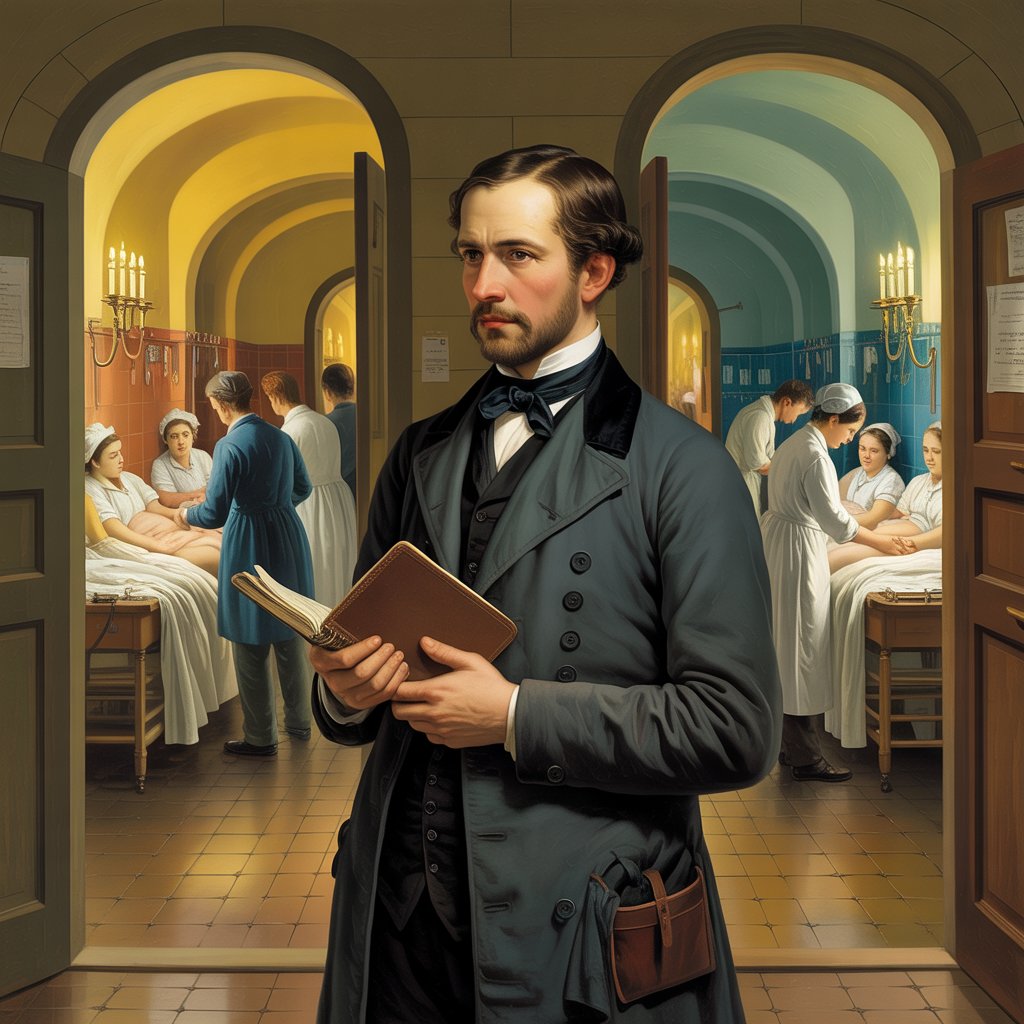
Introduction to Ignaz Semmelweis
Ignaz Semmelweis was a Hungarian physician born on July 1, 1818, in Buda, which is now part of Budapest, Hungary. He pursued a rigorous education in medicine at the University of Vienna, where he was exposed to the thriving yet perilous practices of obstetrics in the early 19th century. During this period, maternal mortality rates were alarmingly high, particularly due to puerperal fever, a deadly infection that affected women post-childbirth. The medical community at that time largely ignored the underlying factors contributing to these infections, such as hand hygiene and sanitation.
Semmelweis began his career as an assistant to renowned obstetrician Johann Klein at the Vienna General Hospital. His hands-on experience unveiled a troubling pattern: women who were attended to by physicians and medical students coming from autopsy rooms were more likely to contract puerperal fever than those who were assisted by midwives. This observation sparked a critical inquiry into the practices of the day, leading Semmelweis to believe that the contamination from cadaveric material was being transferred to the mothers during childbirth.
In response to his findings, Semmelweis initiated a groundbreaking, albeit initially controversial, campaign for hand hygiene among medical practitioners. He introduced a rigorous handwashing protocol that required obstetricians and medical students to wash their hands with a chlorinated lime solution before examining pregnant women. This revolutionary practice dramatically reduced the incidence of puerperal fever in the maternity ward he managed. Despite the evident benefits, Semmelweis faced significant opposition from his contemporaries, who were unprepared to accept his ideas, which challenged established medical theories and practices.
In essence, Ignaz Semmelweis’s dedication to improving maternal health through stringent hygiene protocols marked the beginnings of the hand hygiene revolution in medicine. His contributions laid essential groundwork for modern obstetrics and infection control, albeit met with substantial resistance during his lifetime.
The Childbed Fever Epidemic
Throughout the 19th century, maternity wards faced a critical public health crisis known as childbed fever, or puerperal fever. This infectious disease was characterized by severe inflammation and infection of the uterus following childbirth. Symptoms often included high fever, chills, abdominal pain, and a foul-smelling discharge from the uterus. When left untreated, childbed fever frequently led to severe complications, including sepsis and even death, significantly impacting mothers during a vulnerable time in their lives.
The epidemic could be attributed in part to the medical practices of the era. Many maternity wards were overcrowded, with inadequate sanitation protocols in place. The prevailing belief at the time was that childbed fever was a consequence of maternal conditions rather than an infectious disease that could be prevented. Consequently, the mortality rates among women giving birth in these wards skyrocketed, with estimates indicating that as many as 10 to 15 percent of new mothers succumbed to the illness. The devastating effects rippled through families, leaving many without mothers and creating a public outcry for reform.
As the epidemic continued, societal norms around childbirth were challenged, forcing families to confront the reality that their loved ones could perish from complications arising in what was supposed to be a joyous moment. These losses were felt not only on a personal level but also deeply impacted the fabric of communities, drawing attention to the urgent need for improved healthcare standards and practices in obstetrics. This crisis created fertile ground for the eventual acceptance of revolutionary ideas regarding hygiene and infection control, laying the groundwork for pivotal transformations within the field of medicine. As such, addressing childbed fever became a moral imperative, necessitating a solution that would safeguard the lives of mothers and their newborns.
The Discovery of Hand Hygiene
In the mid-19th century, Ignaz Semmelweis, a Hungarian physician, embarked on a journey that would later revolutionize patient care. His groundbreaking observations stemmed from the stark discrepancies in maternal mortality rates between two maternity clinics in Vienna. One clinic, predominantly staffed by physicians and medical students, exhibited alarmingly high rates of puerperal fever, a condition that led to the deaths of many new mothers. Contrarily, the other clinic, where midwives attended births, reported significantly lower mortality rates. This puzzling contrast drove Semmelweis to thoroughly investigate the underlying factors contributing to these outcomes.
As he delved deeper, Semmelweis pondered the possible causes of the higher infection rates in the physician-run clinic. After carefully analyzing the prevailing practices, he hypothesized that the physicians were transmitting infections from cadavers to mothers during examinations. This hypothesis was revolutionary at the time, challenging the medical community’s prevailing beliefs about disease transmission. Semmelweis proposed that proper hand hygiene, specifically the washing of hands with chlorine solutions, could drastically reduce the incidence of infection.
Upon implementing a mandatory handwashing regime in the physician clinic, Semmelweis observed an immediate and substantial decrease in mortality rates. This transformative practice not only showcased the critical role of hand hygiene in infection control but also emphasized its importance in improving patient outcomes. It became increasingly evident that the simple act of washing hands before examining patients was a pivotal intervention in minimizing the risk of infections.
While Semmelweis’s findings were met with resistance and skepticism from his contemporaries, the evidence he presented laid the groundwork for the future of hygiene practices in medicine. The introduction of chlorine handwashing marked the beginning of a paradigm shift in patient care, underpinning the necessity of hand hygiene as an essential component in healthcare settings. The implications of his work continue to resonate today, highlighting the significance of cleanliness in preventing infections and safeguarding public health.
Resistance from the Medical Community
Ignaz Semmelweis, often hailed as a pioneer of hand hygiene, encountered significant resistance from the medical community during his attempts to advocate for antiseptic practices in the 19th century. His revolutionary findings, which indicated that handwashing with chlorinated lime solutions drastically reduced maternal mortality rates, were met with skepticism and outright hostility. This backlash can primarily be attributed to deeply entrenched medical beliefs of that era, which prioritized established practices over emerging scientific evidence.
Many physicians at the time adhered to the prevailing humoral theory, which was rooted in pre-scientific ideas about disease causation. This outdated framework did not accommodate the notion that invisible agents, such as germs, could influence health outcomes. Consequently, Semmelweis’s emphasis on the necessity of hand hygiene was seen as a direct challenge to the status quo. His assertion that doctors could be the unwitting carriers of fatal pathogens was an unsettling proposition that many refused to accept.
Moreover, the medical establishment was characterized by a dismissive attitude towards any innovations that threatened personal and institutional reputations. Semmelweis’s insistence on reforming obstetric practices jeopardized the established norms, impacting the prestige and authority of many obstetricians. Personal conflicts also surfaced, as fellow physicians lashed out against what they perceived as an affront to their professional integrity. In some cases, this hostility manifested in public ridicule, personal attacks, and rejection of his ideas, thus magnifying the sense of isolation Semmelweis felt.
This multifaceted resistance not only stifled Semmelweis’s efforts but also delayed the broader acceptance of hand hygiene in medical practices. The consequences of this opposition underscore the complexities of implementing change within established medical frameworks, as well as the human reluctance to embrace revolutionary ideas that challenge deeply held beliefs.
The Impact on Maternal Health
Ignaz Semmelweis’s contributions to maternal health during the mid-19th century were groundbreaking and transformative. His introduction of stringent hand hygiene protocols within maternity wards marked a significant shift in the approach to obstetric care. Prior to his interventions, the mortality rates among women giving birth were alarmingly high, primarily due to puerperal fever, a severe infection following childbirth. Semmelweis hypothesized that the introduction of infectious agents from medical personnel’s hands could be a contributing factor to these tragic outcomes.
By mandating that all medical staff wash their hands with a chlorine solution before attending to patients, Semmelweis effectively reduced the incidence of puerperal fever. In the Vienna General Hospital, where he implemented his protocols, the mortality rate in the obstetric clinic dropped dramatically from 18.3% to an astonishing 1.3%. This drastic reduction highlighted the direct impact of hand hygiene on maternal health. As a result, more women were able to give birth safely, contributing not only to improved health for mothers but also to broader societal benefits through the preservation of family units.
The success of Semmelweis’s hand hygiene practices sparked increased awareness of the importance of cleanliness in medical settings. Although he faced significant resistance from the medical community at the time, his findings laid the foundation for modern infection control practices. The profound implications of his work extend beyond childbirth, emphasizing the need for rigorous hygiene standards in all healthcare environments to safeguard patient health.
Semmelweis’s legacy cannot be overstated. His fight for hand hygiene in maternity wards not only saved countless lives during his time but also reshaped practices in obstetrics and beyond. Today, his contributions continue to resonate, reminding the medical community of the critical role hand hygiene plays in enhancing maternal health and patient safety.
Legacy and the Evolution of Hygiene Practices
The legacy of Ignaz Semmelweis extends far beyond his own era, profoundly influencing modern medicine and hygiene practices. His pioneering work on hand hygiene in the mid-19th century laid foundational principles that continue to guide infection control protocols today. Semmelweis’s insistence on the necessity of handwashing with chlorinated lime solution among healthcare providers was a revolutionary departure from existing practices, directly addressing the tragic maternal mortality rates attributed to puerperal fever in his time. His persistence in advocating for hand hygiene underscores the critical link between cleanliness and health outcomes.
As Semmelweis’s findings began to garner attention, they catalyzed a broader movement towards antiseptic techniques. The subsequent work of Joseph Lister, who implemented carbolic acid as an antiseptic during surgical procedures, can be traced back to the principles Semmelweis championed. This evolution marked a pivotal moment in medical history where the understanding of germ theory began to reshape healthcare practices. Today, hand hygiene is a cornerstone of infection prevention, prompting rigorous protocols in hospitals and healthcare settings worldwide.
In contemporary healthcare, the importance of hand hygiene cannot be overstated. With the rise of hospital-acquired infections, the World Health Organization and various health authorities have emphasized adherence to handwashing protocols. Regular handwashing with soap and water or the use of alcohol-based hand sanitizers has become standard practice for medical professionals and patients alike. The integration of hand hygiene into daily routines reflects a significant evolution from Semmelweis’s time and illustrates the lasting impact of his discoveries.
In conclusion, Ignaz Semmelweis’s legacy as a pioneer of hand hygiene significantly transformed medical practices and infection control strategies. His dedication to promoting cleanliness laid the groundwork for modern antiseptic techniques and highlights the continuing importance of hygiene in preserving public health. Today, we continue to reap the benefits of his tragic yet transformative contributions to medicine.
Recognition and Tragedy
Ignaz Semmelweis, a Hungarian physician, significantly transformed the landscape of maternal healthcare through his pioneering research on hand hygiene. However, his journey was fraught with hardship and professional isolation. For years, Semmelweis advocated the importance of meticulous handwashing with chlorinated lime solutions among obstetricians to reduce the incidence of puerperal fever. Despite the mounting evidence he presented, the medical community largely dismissed his findings. This rejection not only tarnished his professional reputation but also took a considerable toll on his mental health.
Throughout his career, Semmelweis struggled to gain acceptance for his revolutionary ideas. His contemporaries were resistant to change, favoring traditional practices that often disregarded the necessity of hygiene. It was a tragic irony that the very profession he sought to improve turned a blind eye to the grim realities he aimed to address. The anguish of being unrecognized and the knowledge that his methods could save countless mothers and infants weighed heavily on him.
Today, Semmelweis is celebrated as a champion of hygienic practices, and his legacy continues to influence modern healthcare. His tragic story serves as a reminder of the relentless struggle for recognition faced by pioneers in medical science and the vital importance of adherence to hygiene principles in healthcare settings.
Modern Hand Hygiene Standards
Hand hygiene is a fundamental practice in healthcare settings, integral to infection control and the prevention of healthcare-associated infections (HAIs). Following the groundbreaking revelations of Ignaz Semmelweis in the 19th century, modern protocols have evolved into comprehensive guidelines that emphasize the importance of hand cleanliness among medical professionals. Current hand hygiene standards are driven by both scientific research and established public health policies, leading to the implementation of systematic practices in hospitals and clinics worldwide.
The World Health Organization (WHO) has developed a series of guidelines that emphasize the Five Moments for Hand Hygiene: before patient contact, before aseptic procedures, after body fluid exposure risk, after patient contact, and after contact with patient surroundings. Each of these critical moments presents an opportunity to reduce the risk of transmitting pathogens, thereby protecting both patients and healthcare workers. Furthermore, adherence to these principles has been shown to significantly decrease the rates of HAIs, substantiating the necessity of rigorous hand hygiene practices.
To ensure compliance, many medical facilities now implement regular training and assessment programs for staff members. These initiatives often include an introduction to the most effective techniques for handwashing and the appropriate use of alcohol-based hand rubs. Moreover, the establishment of hand hygiene champions—healthcare professionals dedicated to advocating for and monitoring hygiene practices—has emerged as an effective strategy in fostering a culture of safety. Additionally, real-time feedback mechanisms are increasingly being utilized to encourage ongoing adherence to hand hygiene protocols.
In conclusion, the evolution of hand hygiene standards demonstrates a commitment to patient safety that resonates with Semmelweis’s findings. By reinforcing the importance of hand hygiene through accessible guidelines and continuous education, healthcare facilities play a vital role in the advancement of infection control practices, ultimately safeguarding the health of patients in their care.
Conclusion: Lessons from Semmelweis’s Journey
The journey of Ignaz Semmelweis serves as a poignant reminder of the challenges faced in the advancement of medical practices, particularly in the domain of hand hygiene. His groundbreaking work in identifying the correlation between handwashing and the reduction of maternal mortality rates during childbirth highlights the paramount importance of adopting evidence-based practices in healthcare settings. Despite the rigorous resistance Semmelweis encountered from his contemporaries, his unwavering commitment to patient safety and well-being sets a powerful precedent for modern medicine.
One of the key lessons from Semmelweis’s story is the necessity of being open to new ideas, particularly when they contravene established norms. The medical community’s initial rejection of his findings illustrated a broader issue related to how innovation is often met with skepticism. Semmelweis’s insistence on hand hygiene, though simple, was revolutionary and emphasizes the value of questioning traditional practices that may not be grounded in empirical evidence. This mindset is essential not only for healthcare professionals but for all individuals aiming to foster improvement within their fields.
Furthermore, his experience underscores the need for resilience in the face of adversity. Semmelweis faced significant pushback for promoting hand hygiene, but his dedication ultimately paved the way for a shift in attitudes towards cleanliness in medical environments. This resilience serves as an inspirational call to action, encouraging the continued examination and refinement of healthcare practices. By prioritizing patient safety and focusing on fundamental yet effective measures, such as hand hygiene, the medical community can continue to advance towards a safer future for all patients.
In recognizing Semmelweis’s legacy as a pioneer in hand hygiene, one is reminded that even the simplest practices can lead to monumental changes in health outcomes. His story calls for ongoing education, advocacy for evidence-based changes, and an openness to revisiting established norms in the pursuit of improved patient care.