Staying energized during long workdays can feel like a constant battle, especially for professionals in high-demand roles like nursing, teaching, or office jobs. Fatigue not only affects your productivity but also your overall health. Nurses, who are trained in both wellness and endurance, know a thing or two about keeping energy levels stable throughout the day.
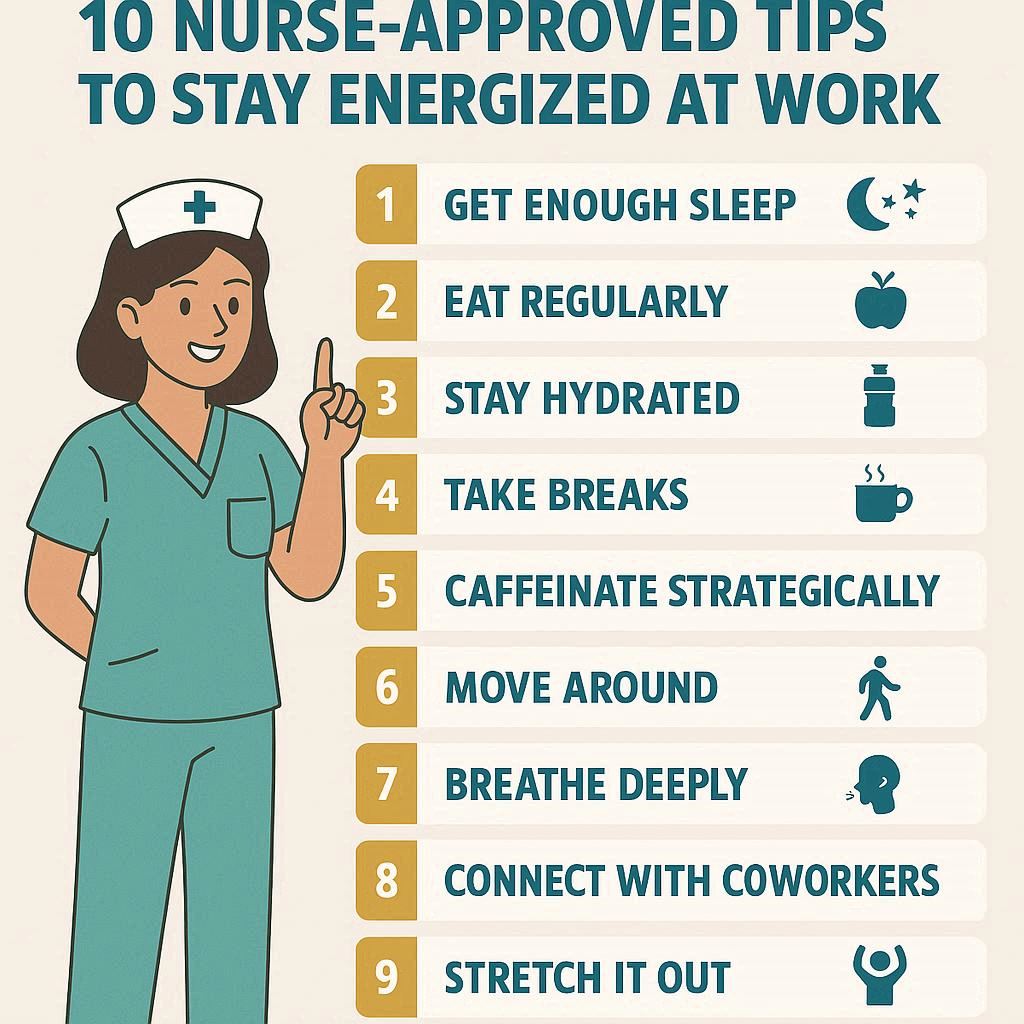
Here are 10 nurse-approved, practical, and science-backed tips to help you stay energized at work — without relying only on endless cups of coffee.
1. Start Your Day with a Balanced Breakfast
Nurses often begin their shifts before sunrise, and they never underestimate the power of a balanced breakfast.
- Choose protein + complex carbs: oatmeal with nuts, eggs with whole-grain toast, or Greek yogurt with fruit.
- Avoid heavy, greasy meals that cause sluggishness.
- Add hydration — a glass of water before your morning coffee sets the tone for energy balance.
2. Stay Hydrated — Water First, Caffeine Later
Dehydration is one of the fastest drains on energy. Nurses recommend drinking water consistently, not just when you feel thirsty.
- Keep a refillable water bottle at your desk.
- Aim for at least 8–10 cups per day (adjust based on activity level).
- Use caffeine wisely: coffee or tea is fine, but avoid drinking it late in the day, which can disrupt sleep.
3. Take Short Movement Breaks
Sitting too long can make you feel more tired than physical work. Nurses know the importance of circulation.
- Every hour, stand up for 2–3 minutes.
- Stretch your back, neck, and legs.
- Walk around the office or even do desk exercises.
Simple Office Stretches to Avoid Neck Pain
4. Practice Mindful Breathing
Fatigue isn’t just physical — it’s mental. Nurses often pause between tasks to practice short breathing exercises.
- Try 4-7-8 breathing: inhale for 4 seconds, hold for 7, exhale for 8.
- Repeat for 1–2 minutes to feel calmer and more alert.
- This helps reduce stress hormones, which drain your energy.
5. Eat Energy-Sustaining Snacks
Instead of reaching for sugary treats, nurses recommend snacks that provide steady fuel.
- Examples: almonds, trail mix, apple slices with peanut butter, or hummus with carrot sticks.
- Avoid candy bars and soda, which cause energy crashes.
6. Organize Your Tasks by Energy Levels
Nurses are trained to manage priorities — you can apply the same method.
- Tackle high-energy tasks in the morning when your brain is fresh.
- Save smaller, repetitive tasks for the afternoon slump.
- This prevents burnout and helps you feel more accomplished.
7. Limit Screen Fatigue
Constant screen use drains energy and strains your eyes.
- Follow the 20-20-20 rule: every 20 minutes, look at something 20 feet away for 20 seconds.
- Adjust your screen brightness.
- Take handwritten notes or switch tasks to break the monotony.
8. Create a Positive Workspace
Your environment impacts your energy more than you think.
- Add natural light or a desk lamp that mimics daylight.
- Keep your desk clutter-free.
- A small plant can improve mood and air quality.
9. Get Social Support at Work
Nurses thrive because they support each other during long shifts. A quick chat with a coworker, sharing a laugh, or offering encouragement can recharge your mental batteries.
- Take short breaks with colleagues.
- Build connections to reduce stress.
10. Prioritize Rest Outside of Work
You can’t pour from an empty cup. Nurses emphasize the importance of good sleep hygiene:
- Stick to a consistent bedtime.
- Avoid screens 1 hour before bed.
- Aim for 7–9 hours of quality sleep.
Without rest, no amount of coffee, snacks, or motivation will keep you energized.
Nurse-Approved Q&A Section
Q1: How can I stay energized without coffee?
A: Focus on hydration, light movement breaks, and energy-boosting snacks. Breathing exercises and stretching are excellent natural stimulants.
Q2: What’s the best quick snack for energy at work?
A: A handful of nuts, Greek yogurt with fruit, or an apple with peanut butter — all provide protein + fiber to sustain energy without spikes.
Q3: I always feel drowsy after lunch. What can I do?
A: Choose a lighter lunch with lean protein, veggies, and whole grains. Avoid heavy fried foods or sugary drinks. Also, a short walk after lunch can prevent post-meal fatigue.
Q4: How do nurses handle 12-hour shifts without burning out?
A: Nurses balance hydration, small, frequent meals, short mental breaks, teamwork, and strict sleep hygiene. These same habits work in any profession.
Q5: Does multitasking drain energy faster?
A: Yes. Multitasking increases mental fatigue. Prioritize tasks in order of importance and focus on one at a time to conserve energy.
Q6: How can I stay energized at work all day?
A: Stay energized at work by drinking enough water, eating protein-rich snacks, taking short movement breaks, practicing mindful breathing, and prioritizing quality sleep. Nurses recommend organizing tasks by energy levels and limiting screen fatigue for lasting productivity.
Final Thoughts
Staying energized at work is not about finding a single quick fix—it’s about building sustainable daily habits that fuel both your body and mind. Nurses, who work some of the most demanding shifts, have shown us that energy management is a combination of smart nutrition, hydration, movement, mindfulness, and rest. By applying these strategies, you can transform your workday from draining to empowering.
Think of your energy as a resource that needs to be protected. A healthy breakfast, small mindful breaks, proper hydration, and quality sleep are not luxuries—they are necessities if you want to perform at your best. Even small changes, such as switching from sugary snacks to protein-rich alternatives or taking a two-minute breathing break, can make a powerful difference in how you feel throughout the day.
The key takeaway is that you don’t have to push through fatigue or rely solely on caffeine to stay productive. Instead, focus on holistic, nurse-approved habits that build resilience and stamina over time.
Your energy is your greatest asset at work. Take care of it the way healthcare professionals do: with consistency, balance, and self-care. When you do, you’ll find that every workday feels more manageable—and more rewarding.